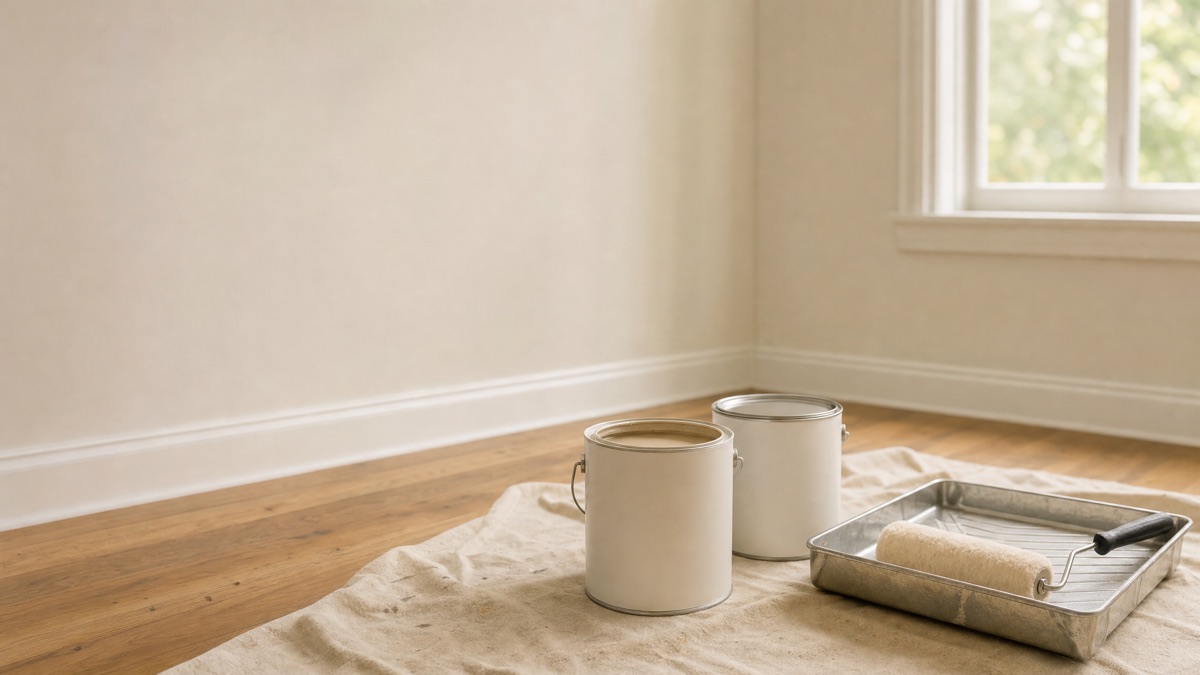
Paint is the rare material where buying too much and too little both sting: leftover gallons harden in the garage, and running out mid-wall guarantees a visible lap line where the new gallon starts. The calculator below converts your room into gallons for walls and ceiling using real-world coverage rates, and the sections after it cover the judgment calls the math can't make for you: coats, primer, and sheen.
Paint Calculator
Based on 375 sq ft per gallon. Buy quarts instead of a second gallon when the exact figure is within a quart of a whole gallon. Trim paint: one quart handles the trim in most rooms.
The Math Behind It
Gallons = (paintable square feet × coats) ÷ 375. Paintable square feet is perimeter times wall height, minus about 21 square feet per door and 15 per window. Labels claim 350-400 square feet per gallon; 375 is the honest planning number for smooth, previously painted walls. Knock coverage down to 250-300 for the first coat on bare drywall, fresh skim coats, or heavy texture, because the surface drinks paint until it's sealed.
How Many Coats, by Situation
| Situation | Coats | Notes |
|---|---|---|
| Same color refresh | 1-2 | Patched spots flash through 1 coat |
| Light over light | 2 | The standard job |
| Light over dark | 2 + tinted primer | Primer is cheaper than a 3rd finish coat |
| Deep reds / bright accents | 2-3 | Low-hide pigments; gray primer underneath helps |
| Bare drywall | primer + 2 | See primer rules below |
Primer Rules
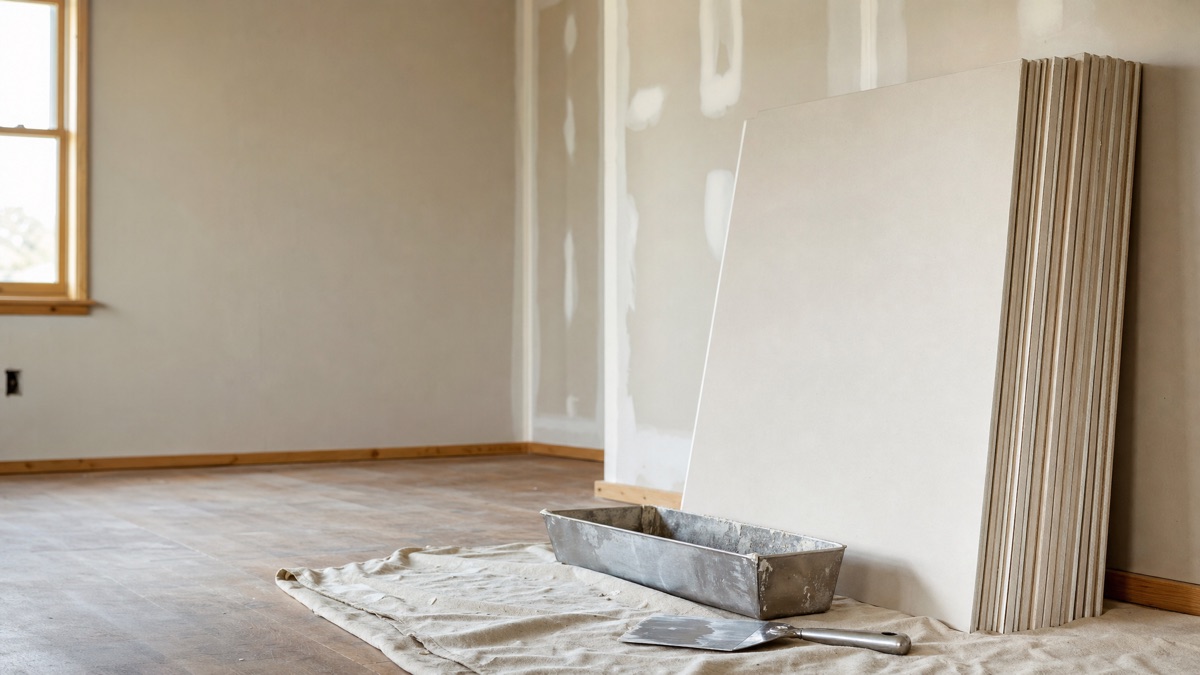
Primer exists to seal porous surfaces, block stains, and give finish paint something to grip. You need it on bare drywall and joint compound (new walls and every patch), over stains (water marks, smoke, marker bleed through latex without a stain-blocking primer), on glossy surfaces after a scuff sand, and under drastic color changes. Just hung new drywall? Our drywall calculator covers the wall itself, and PVA drywall primer is the cheap, correct first coat on it.
The lap-line rule
Never let a wall dry mid-coat. Paint wall by wall, keeping a wet edge, and box your gallons (mix them together in a bigger bucket) when using more than one on the same color. Two gallons tinted on different days can differ visibly; boxing makes the difference disappear.
Sheen by Room
| Sheen | Where | Why |
|---|---|---|
| Flat / matte | Ceilings, adult bedrooms, low-traffic | Hides surface flaws best, least washable |
| Eggshell | Living rooms, halls, most walls | The default; mild washability, soft look |
| Satin | Kids' rooms, kitchens, baths | Wipeable; shows roller marks a bit more |
| Semi-gloss | Trim, doors, cabinets | Durable, wipeable, highlights sloppy prep |
What Paint Costs in 2026
| Tier | Price | What you get |
|---|---|---|
| Builder / contractor grade | $20-$30 | Fine for ceilings and rentals; more coats to hide |
| Mid-tier retail | $35-$55 | The sweet spot for most rooms |
| Premium | $60-$95 | Better hide and touch-up; one-coat claims still optimistic |
| Specialty (cabinet enamel, bath) | $50-$90 | Buy the specialty product; it earns it |
Add roughly $30-$60 per room for tape, plastic, roller covers, and a decent brush.
If the painting is the last step of a larger project, the order matters: paint after drywall and before flooring when you can. Dripping on subfloor is free; dripping on new LVP is a scrub job. Sizing the flooring too? Run the flooring calculator next, and if the whole room is getting opened up, the kitchen remodel timeline shows where paint falls in the full sequence.
Frequently Asked Questions
How much paint do I need for a 12x12 room?
A 12x12 room with 8-foot ceilings has about 350 square feet of paintable wall after subtracting a door and window. At 375 square feet per gallon, two coats needs just under two gallons of wall paint. Add another gallon if you're painting the ceiling.
How many square feet does a gallon of paint cover?
Most paints are labeled 350-400 square feet per gallon and 375 is a safe planning number on smooth, previously painted walls. Fresh drywall, heavy texture, and porous masonry drink more, plan on 250-300 square feet per gallon for the first coat on those.
Do I need two coats of paint?
Almost always yes. One coat rarely hides evenly even in the same color, and every manufacturer's warranty and washability spec assumes two. The exceptions are a same-color refresh with premium paint, and even then walls with patched spots will flash through one coat.
Do I need primer before painting?
Prime bare drywall, patched areas, stains, glossy surfaces after sanding, and any drastic color change. Going over a dark color with a light one, tint the primer gray or toward the new color; that beats a third coat of expensive finish paint. Paint-and-primer-in-one products are fine on previously painted walls in decent shape, they are not a substitute for real primer on bare or stained surfaces.
How much does it cost to paint a room in 2026?
DIY, a typical bedroom runs $80-$200 in materials: two gallons of mid-tier paint, tape, and sundries. Hiring it out costs $350-$900 per room depending on market, ceiling height, and prep, with whole-interior repaints commonly quoted at $2-$4 per square foot of floor area.